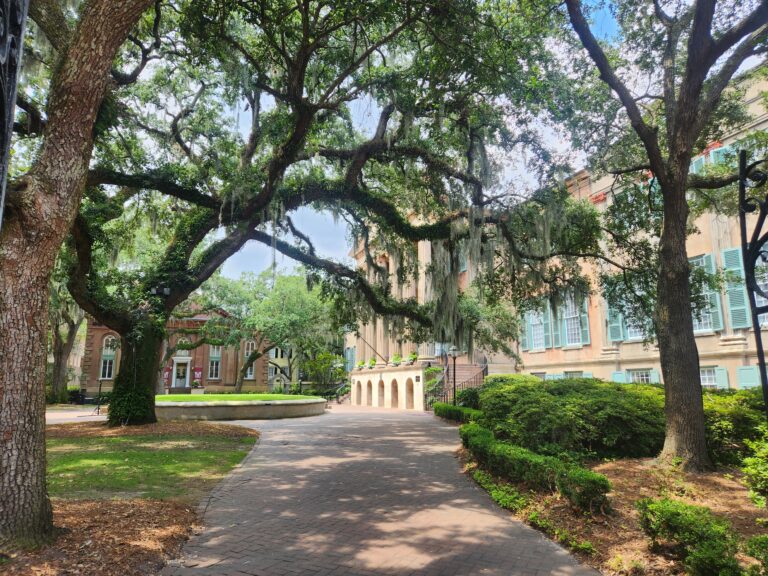
There is a distinct magic to late August in the Lowcountry. The heavy summer heat begins to offer the slightest hint of a breeze, Spanish moss sways gently from the limbs of centuries-old live oaks, and the quiet, sunbaked streets of the Charleston historic district suddenly erupt with a vibrant, unmistakable energy.
Every year, an estimated 11,000 students, along with their families, descend upon the Holy City for the start of the fall semester at the College of Charleston (CofC). For a few frantic days, George, St. Philip, and Coming Streets are filled with moving boxes and mini-fridges. Packing your life into a dorm room at CofC isn’t like moving onto any other campus.
Here, going “back to school” means stepping directly into the living, breathing piece of American history.
Early Foundations
To truly appreciate the ground these modern students walk on, you have to trace it back to 1770. The College of Charleston is the oldest municipal college in the nation and the oldest institution of higher learning south of Virginia.
As an older college, the university’s history is intertwined with many historical figures. Three of CofC’s founding trustees, Edward Rutledge, Arthur Middleton, and Thomas Heyward Jr., signed the Declaration of Independence. Another three, Charles Pinckney, Charles Cotesworth Pinckney, and John Rutledge, signed the U.S. Constitution.
When today’s students open their laptops under the shade of the campus trees, they are studying on land that once hosted revolutionary-era military barracks used by the Second South Carolina Regiment during the War for Independence.
The Masterpieces of the Cistern Yard
At the heart of the move-in week hustle is the Cistern Yard, the iconic, oak-canopied green space that serves as the university’s emotional and architectural anchor. This yard is framed by a trifecta of 19th-century buildings that have stood as silent witnesses to history:
- Randolph Hall (1830): Originally designed by William Strickland and expanded in 1850 by local architect Edward Brickell White, this Greek Revival masterpiece features the famous giant Ionic porticos and signature “Pompeian Red” stucco. Much of this structure was raised and maintained through the highly skilled labor of enslaved craftsmen.
- Porter’s Lodge (1851): Serving as the dramatic gateway to the campus from George Street, this Roman Revival gatehouse famously bears the Greek inscription Gnothi Seauton, “Know Thyself”, above its archway, challenging every entering student for over 170 years.
- Towell Library (1856): A beautiful Classical Revival building with Italianate arched windows that safely housed early academic literary collections, some of which were salvaged from the Revolutionary War.

Then there is the Cistern itself, constructed in 1857. While modern students know it as the grass-covered, elevated stage where they will one day sit in white dresses and tuxedos for graduation, it was originally engineered as a massive rainwater reservoir to help fight the catastrophic fires that frequently plagued historic Charleston.
Innovation Carved in Stone
What makes the CofC campus truly remarkable? The durability of the people and how the campus survived. The physical bricks surrounding the student body have weathered the darkest and most turbulent chapters of American history.
During the Civil War, as Charleston fell under a grueling Union siege in 1864, the campus went dark. Lore says that the campus porter, John Cahill, stayed behind during the Union occupation, successfully pleading for the protection of the historic buildings from destruction.
Just over two decades later, the campus faced an entirely different threat: The Great Charleston Earthquake of 1886.
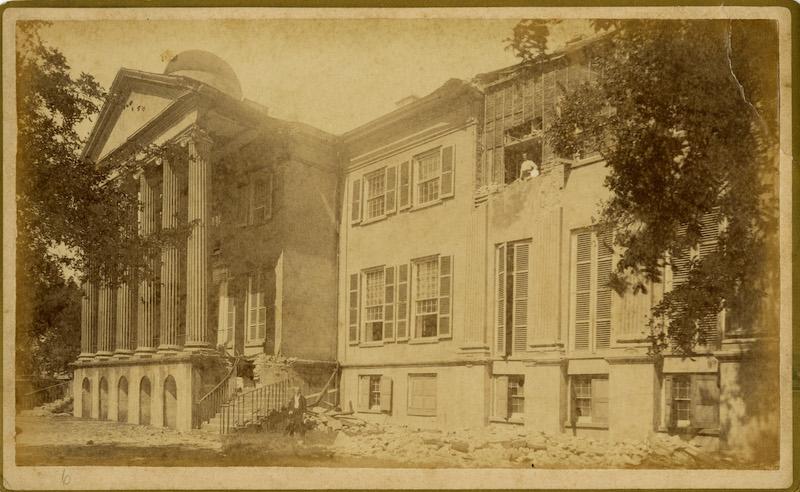
The catastrophic tremor shattered the outer wings of Randolph Hall and destabilized the brickwork across the yard. The university was resourceful, biology professor and amateur architect Gabriel Manigault stepping in to spearhead a decade-long restoration, adding structural iron tie-rods that reinforce the walls to this very day.
A Legacy Continued
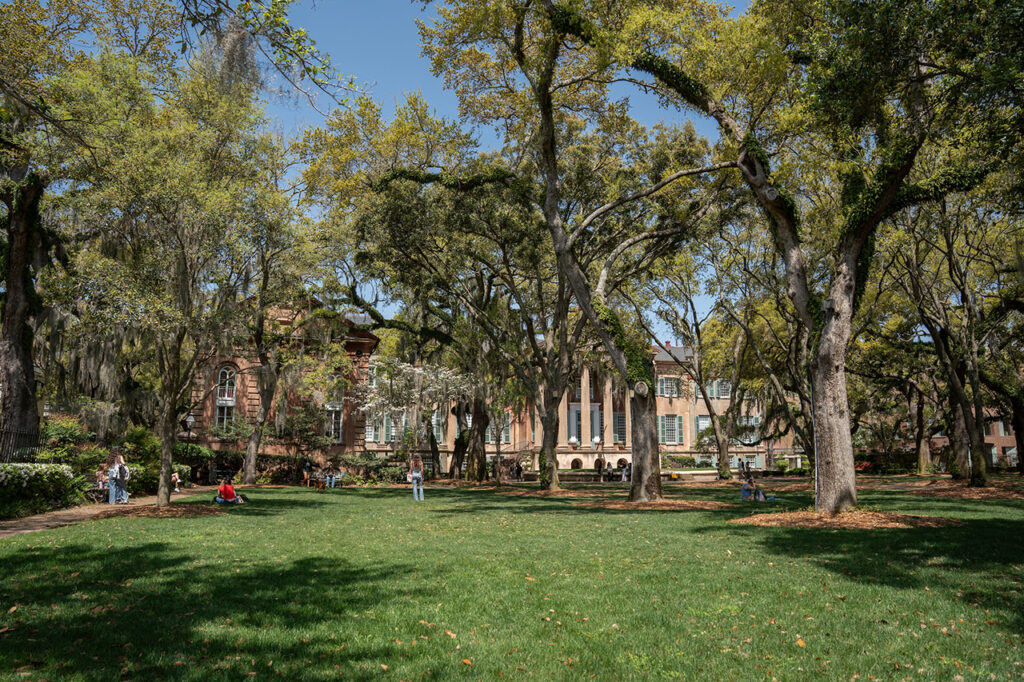
As parents say their bittersweet goodbyes and head home, leaving a new generation of scholars behind on the peninsula, the legacy of the College of Charleston comes alive.
These historic structures are not roped-off museum pieces or ill-preserved monuments to the past. Today, admissions counselors pitch the future from inside the 1856 Towell Library. Philosophy and Classics professors lecture inside the 1830 classrooms of Randolph Hall.
Every autumn, the arrival of thousands of eager young minds breathes fresh life into these ancient bricks. The legacy of CofC is a continuous line, stretching from the revolutionary idealists of 1770 straight to the modern students walking the cobblestones today, carrying the spirit of the Lowcountry forward.
The Campus Escape
Once the cars are finally unpacked, the dorm rooms are arranged, and the heavy lifting of move-in week is behind you, it’s time to escape the campus rush and decompress.
Welcome to 27 State Street, an historic street nestled in the French Quarter.
Just a short, scenic walk from the university, this beautifully preserved area allows you to immerse yourself in the neighborhood’s romantic 19th-century charm.
Whether you are a parent looking to unwind with a glass of wine after a chaotic weekend of heavy lifting, or a family wanting to savor a few quiet, luxurious moments together before the semester officially begins, rest your feet, recharge, and truly experience the magic of historic Charleston.